- The AI Report
- Posts
- 🤖 GPT-5.5 Arrives + Google's Full-Stack AI Play
🤖 GPT-5.5 Arrives + Google's Full-Stack AI Play
OpenAI ships workspace agents, Kimi K2.6 matches Claude at 76% less, and ChatGPT goes free for U.S. doctors

The AI Report
April 28, 2026
In partnership with


OpenAI and Google both drew lines in the sand this week - and your workflow is on the other side
GPT-5.5 arrived, targeting agentic work over conversation, while Google Cloud Next unveiled an entire enterprise AI operating system.
OpenAI also released workspace agents for business teams. Plus: Mira Murati's startup locked in a multibillion-dollar infrastructure deal, Moonshot's Kimi K2.6 matched Claude at 76% less, and we spotlight two tools reshaping how you create and collaborate.
The Latest in AI
🧠 GPT-5.5 Targets Work, Not Chat

OpenAI released GPT-5.5, its newest model designed explicitly for agentic work rather than conversation.
Co-founder Greg Brockman called it "a real step forward towards more agentic and intuitive computing", faster and sharper than GPT-5.4 while consuming fewer tokens.
The model scored 82.7% on Terminal-Bench 2.0, the command-line agent evaluation, compared to Claude Opus 4.7's 69.4%.
GPT-5.5 and GPT-5.5 Pro are now available in ChatGPT and Codex across Plus, Pro, Business, and Enterprise tiers.
Key Insights:
82.7% on Terminal-Bench 2.0 - GPT-5.5 topped Claude Opus 4.7's 69.4% on the command-line agent evaluation, reclaiming the top spot in agentic performance
Fewer tokens, same speed - The model matches GPT-5.4 on per-token latency while using fewer tokens to complete the same tasks, cutting compute costs
$5 input, $30 output - API pricing lands at $5 per million input tokens and $30 per million output tokens, a premium reflecting the model's agentic capabilities
Superapp roadmap - OpenAI plans to merge ChatGPT, Codex, and an AI browser into a single unified enterprise service for knowledge workers
Four models in five months - OpenAI has now released GPT-5.1 through GPT-5.5 since December, maintaining the fastest major-model release cadence in the industry
The Bigger Picture: GPT-5.5 signals that OpenAI's competitive axis has shifted from raw intelligence to operational utility. The model is designed to do things, not discuss them. That distinction matters for enterprises evaluating which AI provider to standardize on. A model that navigates tools, executes code, and manages workflows competes directly with human workflows, not just other chatbots. The superapp vision ties it together: OpenAI wants to be the operating system for knowledge work, not just the brain behind it.
Your prompts are leaving out 80% of what you're thinking.
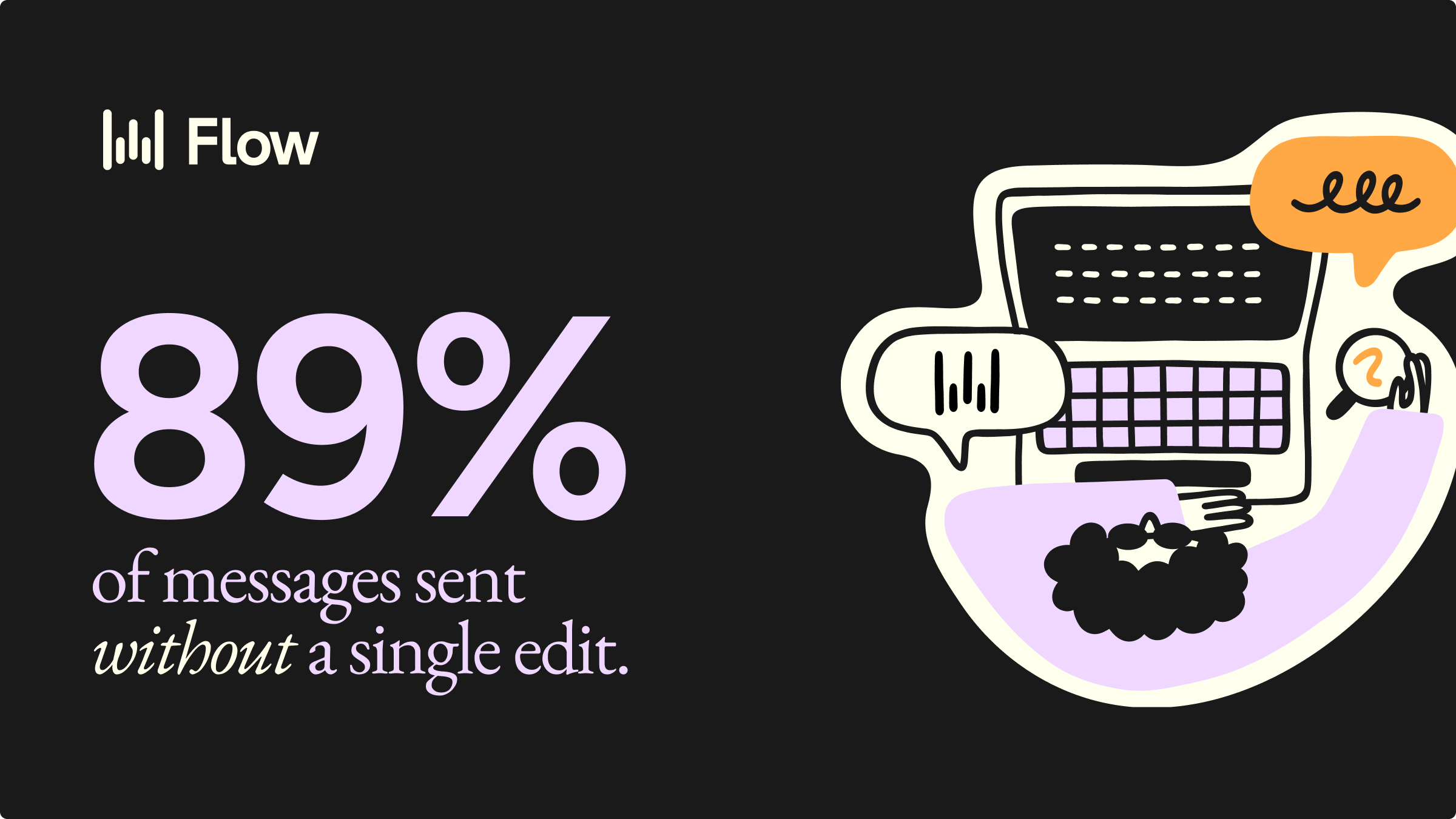
When you type a prompt, you summarize. When you speak one, you explain. Wispr Flow captures your full reasoning — constraints, edge cases, examples, tone — and turns it into clean, structured text you paste into ChatGPT, Claude, or any AI tool. The difference shows up immediately. More context in, fewer follow-ups out.
89% of messages sent with zero edits. Used by teams at OpenAI, Vercel, and Clay. Try Wispr Flow free — works on Mac, Windows, and iPhone.
☁️ Google Unveils Enterprise AI Stack

At Cloud Next '26, Google CEO Sundar Pichai presented data showing that 89% of business teams already run AI agents, and that the average organization operates 12.
Google Cloud CEO Thomas Kurian framed the pitch directly: "Others are handing you the pieces. We're handing you the platform."
The company rolled out the Gemini Enterprise Agent Platform, Workspace Intelligence, Chrome auto-browse, 8th-generation TPU chips, and a $750 million fund for AI startups.
Key Insights:
89% agent adoption - Nearly nine in ten business teams already run AI agents, with the average organization operating 12 across departments
40% seat growth - Gemini Enterprise paid seats grew 40% quarter-over-quarter in Q1 2026, the fastest growth rate in the product's history
TPU 8 chips arrive - Google's 8th-generation custom silicon targets both training and inference workloads for the agentic era
$750M startup fund - A new venture fund backs companies building on Google Cloud's AI infrastructure and agent platform
Chrome auto-browse - A browser automation feature lets AI agents navigate the web and complete multi-step tasks on behalf of users
The Bigger Picture: Google is positioning itself as the only company that controls the full stack, from custom chips to productivity apps under one AI layer. The same-day clash with OpenAI's workspace agents revealed the strategic divide: OpenAI delivered a product; Google delivered a platform. For enterprise buyers, the question is whether a vertically integrated stack delivers more value than best-of-breed tools from multiple vendors. Google's wager is that companies will trade flexibility for simplicity, and that controlling the silicon gives it a permanent cost advantage.
🤖 OpenAI Deploys Agents for Teams

OpenAI released workspace agents for ChatGPT Business, Enterprise, Edu, and Teachers users - cloud-based bots that perform real business tasks autonomously.
Examples include an agent that finds product feedback across the web and sends Slack reports, and a sales agent that drafts follow-up emails in Gmail.
The Codex-powered agents can be shared within organizations, letting teams build once and improve together.
The release puts OpenAI in direct competition with Anthropic's Claude Cowork.
Key Insights:
Five starter templates - Codex-powered agents cover product feedback, sales follow-up, research synthesis, data analysis, and customer support workflows
Cloud-native execution - Agents operate on OpenAI's infrastructure, handling multi-step tasks without occupying users' devices or local compute
Slack and Gmail integration - Agents connect to existing workplace tools, delivering results where teams already collaborate
Team sharing built in - Organizations build an agent once and share it across departments, compounding value with each iteration
Claude Cowork competition - Anthropic already offers autonomous task completion from local files, and OpenClaw went viral as an independent agent platform
The Bigger Picture: Workspace agents transform ChatGPT from a tool you query into a service that completes work on your behalf. For enterprise IT, the implications are immediate: these agents access company data, operate across tools, and act autonomously. The competitive pressure from Anthropic's Claude Cowork and OpenClaw's viral traction forced OpenAI's hand. The companies that move first with agent deployment will set the templates that define how AI work gets structured. OpenAI is racing to make sure those templates run on its infrastructure.
Go from AI overwhelmed to AI savvy professional

AI will eliminate 300 million jobs in the next 5 years.
Yours doesn't have to be one of them.
Here's how to future-proof your career:
Join the Superhuman AI newsletter - read by 1M+ professionals
Learn AI skills in 3 mins a day
Become the AI expert on your team
🗞️ AI Bytes
🔬 Murati's Lab Inks Google Deal
Former OpenAI executive Mira Murati's Thinking Machines Lab signed a multibillion-dollar Google Cloud deal for AI infrastructure powered by Nvidia's GB300 chips. The agreement marks the lab's first cloud provider partnership.
🏥 Free ChatGPT for US Doctors
OpenAI made ChatGPT for Clinicians free for verified U.S. physicians, nurse practitioners, and pharmacists. A 2026 AMA survey found 72% of physicians now use AI in clinical practice, up from 48% last year.
🐉 Kimi K2.6 Undercuts Claude's Price
Moonshot's Kimi K2.6, a 1-trillion-parameter open-weight model, matched Claude Opus 4.6 on coding tests at 76% lower cost. It includes a 262K token window and coordinates up to 300 sub-agents from a single prompt.
🏢 Giants Deploy Agentic AI at Scale
Capcom, Home Depot, Citi, Mars, and Merck are using Google Cloud's agentic AI to automate game testing, customer service, financial advice, and pharmaceutical research at a production scale.
🛠️ Top AI Tools This Week
ChatGPT Images 2.0 🎨
OpenAI's upgraded image generator now integrates web search to create contextually accurate visuals, supports improved text rendering and multilingual output, and adds visual reasoning through a thinking mode. Available across Plus, Pro, Team, and Enterprise tiers, it handles marketing materials to technical diagrams with sharper detail than its predecessor.
Google Workspace Intelligence 🧠
Google's new AI system reaches across Gmail, Calendar, Drive, Docs, Sheets, and Slides to automate tasks based on your existing data. Build spreadsheets through Gemini prompts, get AI-drafted emails, and receive contextual suggestions drawn from your files. Administrative controls let teams decide exactly which data sources the AI can access.
On a scale of 1 to AI-takeover, how did we do today? |