- The AI Report
- Posts
- 🤖 Open Source AI Agent Surpasses GPT-5.4 + Microsoft Pursues Superintelligence
🤖 Open Source AI Agent Surpasses GPT-5.4 + Microsoft Pursues Superintelligence
Plus: Apple woos developers with AI, OpenAI confidentially files for IPO, and Siri AI gets a major upgrade

The AI Report
June 09, 2026
Sponsored by

How 2M+ Professionals Stay Ahead on AI
AI is moving fast and most people are falling behind.
The Rundown AI keeps you ahead of the curve.
It's a free AI newsletter that keeps you up-to-date on the latest AI news, and teaches you how to apply it in just 5 minutes a day.
Plus, complete the quiz after signing up and they’ll recommend the best AI tools, guides, and courses — tailored to your needs.
Harness-1 sets a new standard in AI search.
This open-source agent's impressive performance against GPT-5.4 could redefine competitive advantages in AI retrieval systems.
Plus, Apple lowers barriers for indie developers, OpenAI moves towards its IPO, and Siri evolves into a more conversational assistant.
The Latest in AI
🤖 Researchers trained an open source AI search agent, Harness-1, that outperforms GPT-5.4 on recalling relevant information

- Harness-1's performance leap - Harness-1 achieved a remarkable 73% accuracy in recalling relevant information, outperforming GPT-5.4 and other leading models by significant margins, showcasing the potential of open-source solutions.
- State-externalizing harness - The model's innovative design offloads the bookkeeping of search sessions to a structured environment, allowing it to focus on retrieval tasks without succumbing to 'search amnesia'.
- Data efficiency breakthrough - Harness-1 was trained on just 4,400 unique items, demonstrating that a smarter cognitive architecture can replace the need for vast datasets, challenging traditional approaches to AI training.
The Bigger Picture: The emergence of Harness-1 signals a pivotal shift in the AI landscape, where the efficiency of model training and state management may redefine competitive advantages. As enterprises increasingly demand sophisticated AI that can autonomously navigate complex data environments, models like Harness-1 could lead to a new standard in retrieval-augmented generation (RAG). This trend may compel larger players to rethink their strategies, potentially leading to a more democratized AI ecosystem where open-source solutions can rival proprietary giants. Over the next 6-12 months, we may witness a surge in similar innovations, as developers prioritize creating better cognitive frameworks over merely scaling model size.
🤖 Microsoft AI chief says company was “set free” from OpenAI to pursue superintelligence
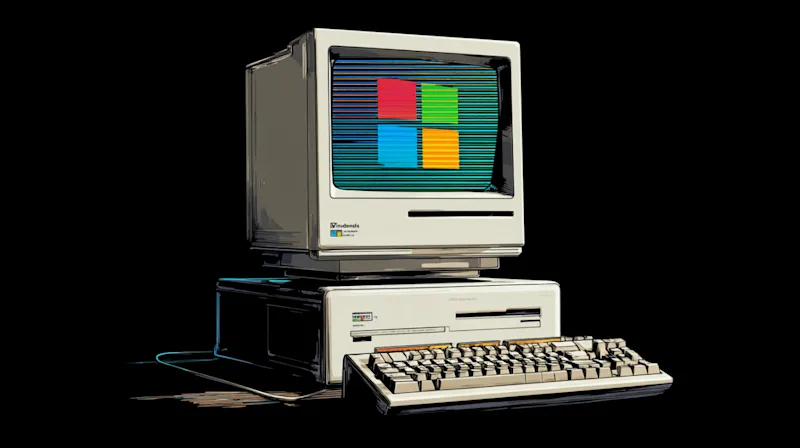
- Autonomy from OpenAI - Microsoft's recent contractual changes have granted it the freedom to develop its own AI models, marking a significant shift in its strategy away from reliance on OpenAI.
- Launch of MAI models - The introduction of the MAI model family, which includes advanced reasoning and multimodal capabilities, represents Microsoft's most ambitious in-house AI release to date.
- Frontier Tuning capability - Microsoft's new Frontier Tuning feature allows enterprise customers to customize AI models using their proprietary data, enhancing the relevance and effectiveness of AI solutions in specific business contexts.
The Bigger Picture: Microsoft's strategic pivot towards developing its own AI capabilities signals a broader trend in the industry where companies are increasingly seeking self-sufficiency in AI technologies. By leveraging its vast enterprise data and custom silicon, Microsoft is positioning itself not just as a consumer of AI models but as a leading creator of frontier technologies. This shift could reshape competitive dynamics, as companies that can harness proprietary data for AI training will likely gain a significant edge. Over the next 6-12 months, we may see a more fragmented landscape where partnerships are complemented by robust in-house developments, ultimately driving innovation and efficiency in enterprise AI applications.
🏢 Apple bets cheaper AI will woo small developers

- No cloud API costs - Apple's Foundation Models will be available to developers with fewer than 2 million downloads at no cloud API cost, significantly reducing entry barriers for small developers.
- Indie developer focus - This initiative mirrors Apple's Small Business Program, which offers lower commission rates to new developers, reinforcing the company's commitment to nurturing indie talent.
- Expanded model capabilities - The Foundation Models framework will now support image input and server models, allowing developers to integrate with their preferred cloud providers for more complex AI tasks.
The Bigger Picture: Apple's strategic move to waive AI infrastructure costs for small developers signals a significant shift in the competitive landscape of AI tools. By lowering financial barriers, Apple not only attracts indie developers but also positions its models as a viable alternative to more expensive cloud solutions. This could lead to a surge in innovation from smaller creators, potentially reshaping the app ecosystem and challenging established players who may not offer similar incentives. Over the next 6-12 months, this approach could foster a more diverse range of applications, enhancing Apple's ecosystem while simultaneously pressuring competitors to rethink their pricing strategies.
🗞️ AI Bytes
🏢 OpenAI files for IPO, following Anthropic
OpenAI has taken a significant step toward an IPO by confidentially submitting a Form S-1 with the SEC, following rival Anthropic's similar move. While OpenAI's valuation stands at $852 billion, it faces internal concerns about revenue targets and compute spending commitments, especially in light of Anthropic's valuation of $965 billion. The upcoming IPOs of both companies will be closely watched, particularly in the context of SpaceX's anticipated debut, which is set to be the largest in history.
📈 Introducing the OpenAI Economic Research Exchange
OpenAI has launched the Economic Research Exchange, a platform aimed at fostering high-impact research on the economic effects of AI through structured collaborations with external researchers. This initiative seeks to generate credible, independent evidence on AI's impact on various economic factors while ensuring privacy and responsible data use. Proposals are invited from researchers with expertise in fields such as labor economics and public finance, with applications open until July 5, 2026.
🤖 Say hi to "Siri AI"—Apple announces new, more "conversational" voice assistant
Apple has unveiled a significant update to its Siri voice assistant, branded as 'Siri AI,' which promises a more conversational experience and deeper integration across its operating systems. Set to roll out this fall, the update leverages on-device Foundation Models and a partnership with Google to enhance Siri's capabilities, allowing it to perform complex tasks by accessing personal data contextually while maintaining strict privacy protections. The new features will initially be available in English and will require specific hardware configurations for optimal performance.
🤖 NotebookLM’s Gemini 3.5 upgrade adds a cloud computer and help finding sources
NotebookLM has introduced a significant upgrade with Gemini 3.5, enhancing its platform by integrating a cloud computer and tools to assist users in finding sources during their research. This upgrade allows users to initiate their research directly within a chat interface, streamlining the research process. The new features aim to improve user experience and efficiency in gathering information.