- The AI Report
- Posts
- 🔒 Perfect Memory Lock In
🔒 Perfect Memory Lock In
Altman says 2026 ChatGPT will remember every word you've ever said and every preference you never stated. Switching costs about to get massive.

The AI Report
December 30, 2025
In partnership with


Sam Altman says perfect memory will lock users into ChatGPT by 2026 while Nvidia just licensed specialized inference chips from a $6.9B startup. Meanwhile, OpenAI researchers found a way to catch AI misbehavior before it happens.
The Latest in AI
💡 Why Complex Reasoning Models Could Make Misbehaving AI Easier To Catch

OpenAI researchers have published a groundbreaking paper outlining new methods for detecting and understanding AI misbehavior in complex reasoning models.
OpenAI's paper introduces a new framework for analyzing AI reasoning processes and identifying potential failure points
The framework aims to identify the root causes of AI misbehavior in complex models before they manifest in real-world applications
This could significantly enhance AI safety and reliability in critical applications across healthcare, finance, and autonomous systems
OpenAI researchers emphasize that understanding the reasoning process is key to improving AI behavior and preventing harmful outputs
The framework represents a fundamental shift in how AI systems are evaluated, moving from output-based to process-based assessment
🤔 Why It Matters:
This breakthrough in understanding AI reasoning could democratize AI safety measures, making it easier for developers to catch and rectify misbehaviors. It fundamentally shifts the landscape of AI governance and safety, paving the way for more reliable AI systems.
💬 Sam Altman: Memory Makes AI Sticky
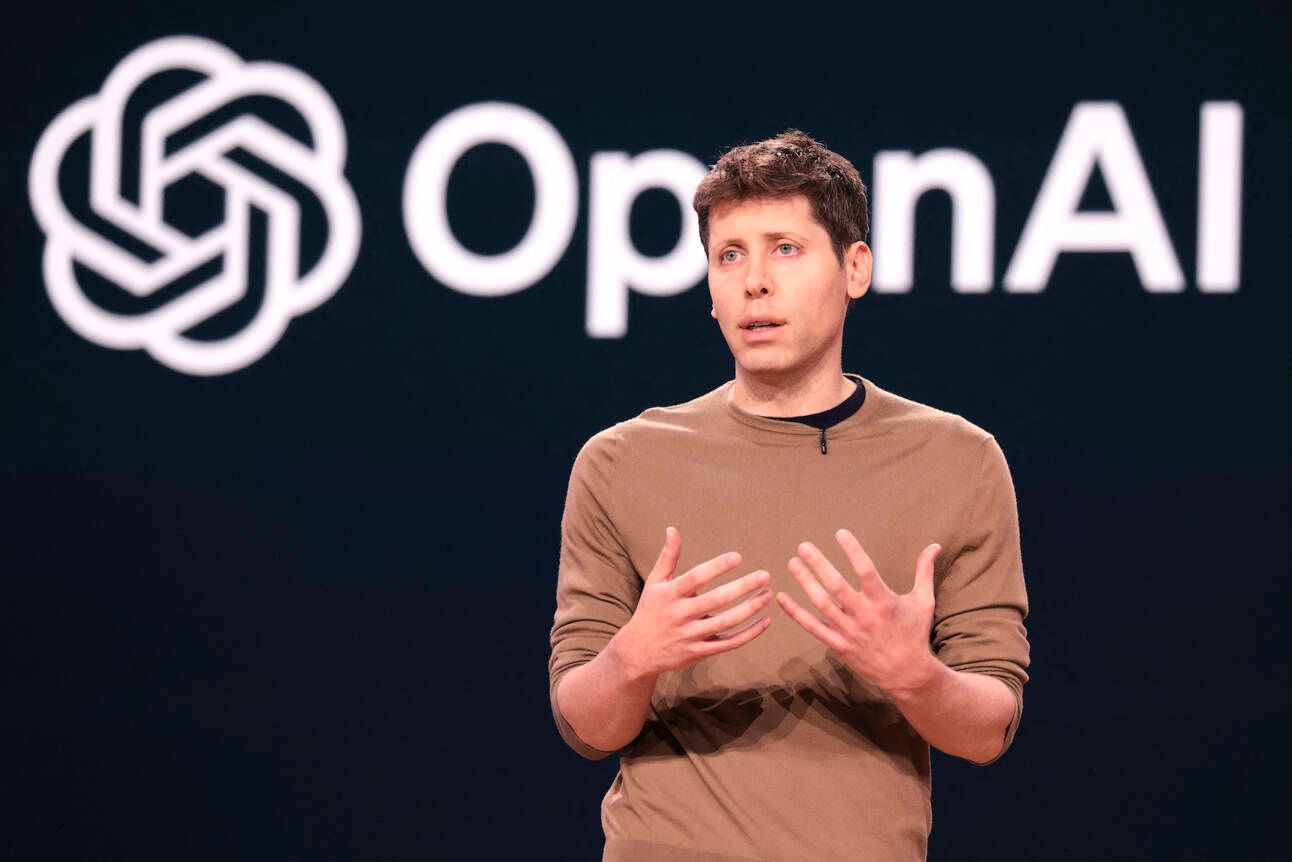
Sam Altman says ChatGPT's memory is still in its "GPT-2 era" and about to get dramatically better. In a Big Technology interview, he revealed OpenAI's strategy: win with the best models, keep users with personalization, and let 800M weekly users drive enterprise adoption. The real shift comes in 2026 when ChatGPT remembers every detail of your life, not just facts.
Future ChatGPT will have "perfect, infinite memory" unlike human assistants. It'll recall every word you've said, document you've written, and subtle preferences you never explicitly stated. Current memory stores basic facts; 2026 versions will personalize across your entire life history.
"Code red" alerts aren't panic - they're standard procedure. OpenAI enters code red once or twice yearly for six to eight weeks when competitive threats emerge. The same thing happened with DeepSeek earlier this year, and it's how they respond fast to threats like Gemini 3.
The $1.4 trillion infrastructure spend works because compute demand exceeds supply. OpenAI has "never found a situation where we can't monetize all the compute we have." If they doubled compute tomorrow, they'd double revenue. Training costs shrink as a percentage while inference revenue grows exponentially.
🤔 Why It Matters:
Altman's reframing the AI race as "who builds the stickiest product" not "who has the smartest model." Perfect memory creates lock-in that technical capabilities can't match - once ChatGPT knows your entire life, switching costs become massive. For competitors, winning on raw model performance won't be enough if users are already deeply integrated.
Tech moves fast, but you're still playing catch-up?
That's exactly why 100K+ engineers working at Google, Meta, and Apple read The Code twice a week.
Here's what you get:
Curated tech news that shapes your career - Filtered from thousands of sources so you know what's coming 6 months early.
Practical resources you can use immediately - Real tutorials and tools that solve actual engineering problems.
Research papers and insights decoded - We break down complex tech so you understand what matters.
All delivered twice a week in just 2 short emails.
🔌 Nvidia Licenses Groq's Inference Tech

Nvidia struck a nonexclusive deal with chip startup Groq for its AI-inference technology, bringing Groq's CEO Jonathan Ross and key staff into Nvidia. Groq's "language processing unit" chips use embedded memory for faster deployment and lower energy consumption than traditional GPUs. The deal follows similar moves from Meta ($14B for Scale AI), Google (Character.AI), and Microsoft (Inflection AI).
Groq was valued at $6.9B in September with BlackRock, Cisco, and Samsung backing. GroqCloud will operate independently under new CEO Simon Edwards while Ross integrates the technology at Nvidia. Groq designs and builds chips in North America using Samsung as a partner.
Inference demand is exploding as everyday AI usage scales. While GPUs dominate training, inference happens every time someone asks ChatGPT a question. Groq's architecture addresses inference-specific needs with better energy efficiency - critical as AI consumption grows.
Ross previously developed Google's TPUs before founding Groq in 2016. The hire signals Nvidia is acquiring specialized inference expertise even as big customers like OpenAI and Meta design their own custom chips.
🤔 Why It Matters:
Nvidia licensing Groq tech despite dominating AI chips (up 35% YTD, world's most valuable company) shows inference optimization is strategic. As customers build custom chips and Google/Amazon compete directly, Nvidia's betting inference workloads need different architectures than training - and they're licensing rather than building everything in-house.
Master ChatGPT for Work Success
ChatGPT is revolutionizing how we work, but most people barely scratch the surface. Subscribe to Mindstream for free and unlock 5 essential resources including templates, workflows, and expert strategies for 2025. Whether you're writing emails, analyzing data, or streamlining tasks, this bundle shows you exactly how to save hours every week.
🗞️ AI Bytes
📰 Tiiny AI reveals world's smallest personal AI Supercomputer
Tiiny AI has officially unveiled the world's smallest personal AI supercomputer, earning verification from Guinness World Records for this technological achievement. The compact device demonstrates significant advances in miniaturization technology while maintaining powerful AI processing capabilities. This breakthrough could democratize access to high-performance AI computing for individual users and small businesses.
📰 A new way to extract detailed transcripts from Claude Code
Developers have discovered an innovative method for extracting comprehensive transcripts from Claude's code generation capabilities, enhancing debugging and documentation processes. This technique provides deeper insights into Claude's reasoning and decision-making process during code creation. The advancement could improve developer workflows and AI-assisted programming efficiency.
📰 AI marketing copilot
A new AI marketing copilot platform has been introduced to help businesses accelerate revenue growth through intelligent marketing automation and insights. The tool combines advanced analytics with AI-driven recommendations to optimize marketing campaigns and customer engagement strategies. This solution targets businesses looking to enhance their marketing effectiveness while reducing manual oversight requirements.
🛠️ Top AI Tools This Week
🕷️ Lection
Lection is an in-browser AI web scraping agent that turns plain-English instructions into reusable scrapers. It extracts structured data from any site, handles pagination and scrolling, follows deep links, and automates form interactions. The AI interprets intent, validates and cleans results, retries errors, and enables scheduled cloud runs with direct exports to CSV/Sheets or integrations with Zapier, Make, and n8n.
On a scale of 1 to AI-takeover, how did we do today? |